
Receiving an adverse GST order from the tax department can be stressful for any taxpayer. However, a departmental order is not necessarily the final word. The GST law provides a structured appeal mechanism that allows taxpayers to challenge orders they believe are incorrect or unjustified.
Understanding the GST appeal process, filing timelines, required documentation, and compliance obligations can significantly improve the chances of a successful outcome. In this guide, we walk you through the complete appeal journey — from receiving a GST order to filing an appeal before the Appellate Authority.
What Is a GST Appeal?
A GST appeal is a legal remedy available to taxpayers who disagree with an order passed by a GST officer. Through the appeal process, taxpayers can present their case before a higher authority and seek relief against disputed tax demands, penalties, interest, or other adverse decisions.
The appeal mechanism ensures that taxpayers receive a fair opportunity to challenge departmental actions and protect their legal rights.
When Should You File a GST Appeal?
You may consider filing an appeal when:
- You disagree with the tax demand raised by the department.
- A penalty has been imposed incorrectly.
- Input Tax Credit (ITC) has been denied without proper justification.
- Refund claims have been rejected.
- Any departmental order adversely impacts your business.
Timely action is critical, as GST law prescribes specific deadlines for filing appeals.
A delayed appeal can result in the loss of valuable legal remedies. Always review departmental orders immediately upon receipt.
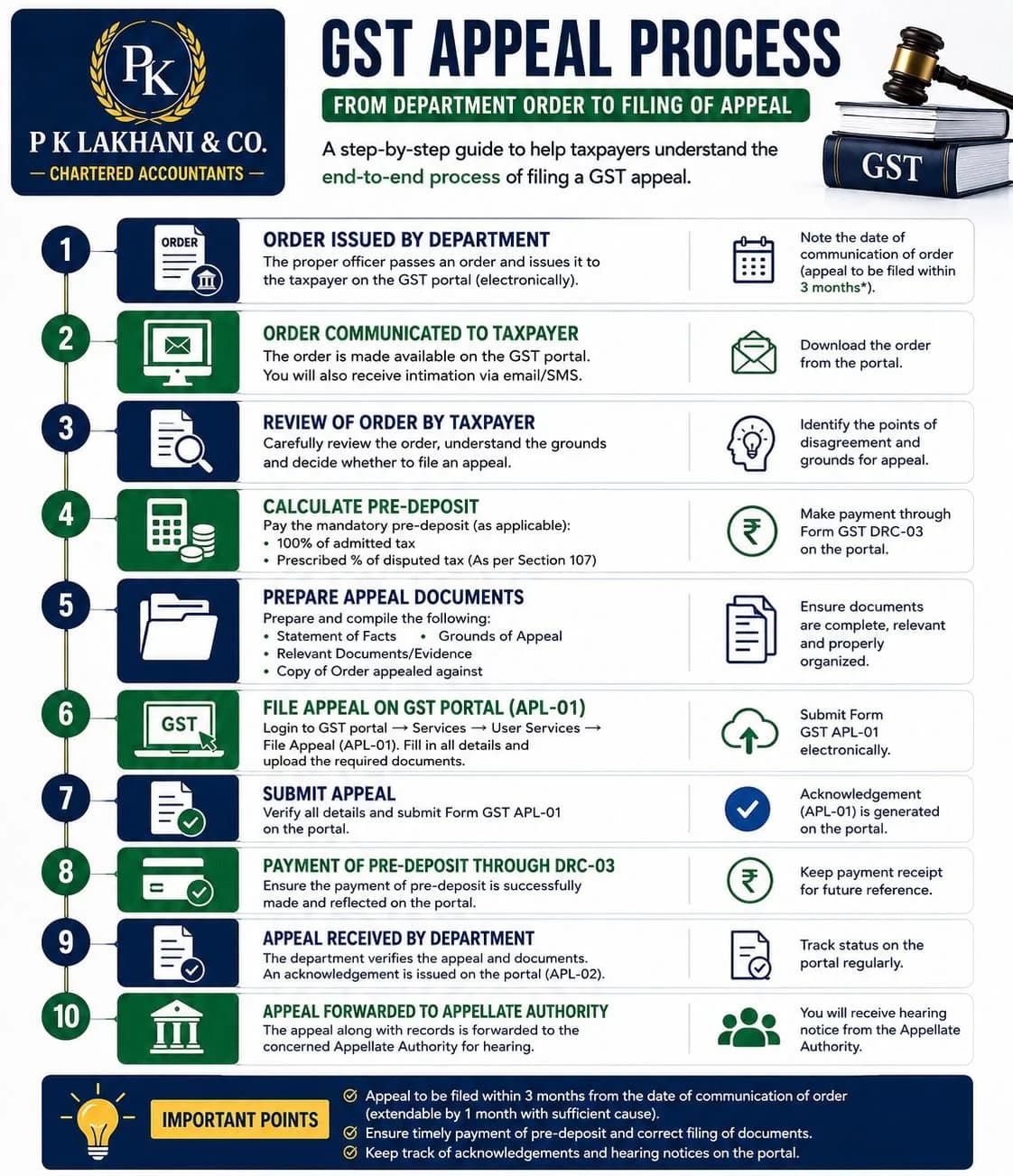
Step-by-Step GST Appeal Process
Step 1: Receipt of Departmental Order
The appeal journey begins when the taxpayer receives an order from the GST department. The order may relate to:
- Assessment proceedings
- Demand and recovery actions
- Refund rejections
- Penalty proceedings
- Input Tax Credit disputes
Carefully review the order and identify the grounds on which you disagree with the department's findings.
Step 2: Analyze the Order and Gather Documentation
Before filing an appeal, collect all relevant documents and supporting evidence, including:
- Copy of the GST order
- Show cause notices
- Replies submitted to the department
- Tax invoices
- Books of accounts
- Reconciliation statements
- Any other supporting records
A well-documented appeal strengthens your case and improves credibility before the appellate authority.
Step 3: Calculate the Mandatory Pre-Deposit
Under GST provisions, filing an appeal generally requires payment of a prescribed pre-deposit amount.
The pre-deposit requirement typically includes:
- Full payment of admitted tax liability, if any
- Applicable statutory pre-deposit on the disputed amount
Failure to comply with pre-deposit requirements can result in the appeal being rejected or considered defective.
Always verify the applicable pre-deposit provisions based on the nature of the dispute and prevailing GST regulations.
Step 4: File Form GST APL-01
The appeal is filed electronically through the GST portal using Form GST APL-01.
While filing the form, taxpayers must:
- Enter appeal details.
- Mention grounds of appeal.
- Upload supporting documents.
- Provide details of tax, interest, penalty, and disputed amounts.
- Furnish proof of pre-deposit payment.
Ensure that all information is accurate and supported by documentation.
Step 5: Submit Supporting Documents
After filing Form GST APL-01, attach all relevant documents that support your case.
Important documents may include:
- Copy of the impugned order
- Statement of facts
- Grounds of appeal
- Evidence supporting claims
- Proof of payment of pre-deposit
Proper documentation can play a decisive role in the success of an appeal.
Step 6: Acknowledgment and Forwarding of Appeal
Upon successful submission, the GST system generates an acknowledgment reference.
The appeal is then forwarded to the Appellate Authority for examination and adjudication.
The authority may:
- Accept the taxpayer's contentions.
- Partially allow the appeal.
- Reject the appeal.
- Seek additional information or clarification.
Key Factors for a Successful GST Appeal
To improve the likelihood of a favorable outcome:
- File the appeal within prescribed timelines.
- Prepare detailed and legally sound grounds of appeal.
- Ensure complete documentation.
- Comply with all procedural requirements.
- Maintain proper records and evidence.
- Seek professional assistance for complex matters.
Strong preparation often determines the strength of the case before appellate authorities.
Common Mistakes to Avoid
Many taxpayers weaken their appeals due to avoidable errors, such as:
- Missing filing deadlines
- Incomplete documentation
- Incorrect calculation of pre-deposit
- Weak grounds of appeal
- Failure to respond to notices from authorities
- Inaccurate information in Form GST APL-01
Avoiding these mistakes can save significant time, cost, and litigation effort.
Why Professional Guidance Matters
GST litigation involves technical legal and procedural requirements. Professional guidance can help taxpayers:
- Evaluate the strength of their case
- Draft effective grounds of appeal
- Ensure procedural compliance
- Manage documentation efficiently
- Represent matters strategically before authorities
Expert assistance often helps businesses navigate disputes more confidently and effectively.
Conclusion
The GST appeal process is an important safeguard available to taxpayers against adverse departmental orders. By understanding the appeal mechanism, adhering to statutory timelines, maintaining proper documentation, and fulfilling pre-deposit requirements, taxpayers can effectively exercise their legal rights.
Whether the dispute relates to tax demands, penalties, refunds, or Input Tax Credit issues, a structured and timely approach can significantly influence the outcome of the appeal.
A well-prepared appeal is not just a procedural requirement—it is an opportunity to present your case effectively and secure a fair resolution.
Need assistance with GST appeals, departmental notices, or GST litigation matters? Contact PK Lakhani & Co. today for professional guidance and expert representation.